
How to Trim Your Beard Without Making a Mess
Trimming your beard can be a messy affair, but it doesn’t have to be. At Barber Craft, we’ve seen countless clients struggle with hair-covered sinks and floors after their grooming sessions.
In this guide, we’ll show you how to trim your beard without making a mess, ensuring a clean and enjoyable grooming experience. We’ll cover everything from choosing the right tools to step-by-step trimming techniques that keep your space tidy.

What Tools Do You Need for a Clean Beard Trim?
Electric Trimmers: Your Precision Powerhouse
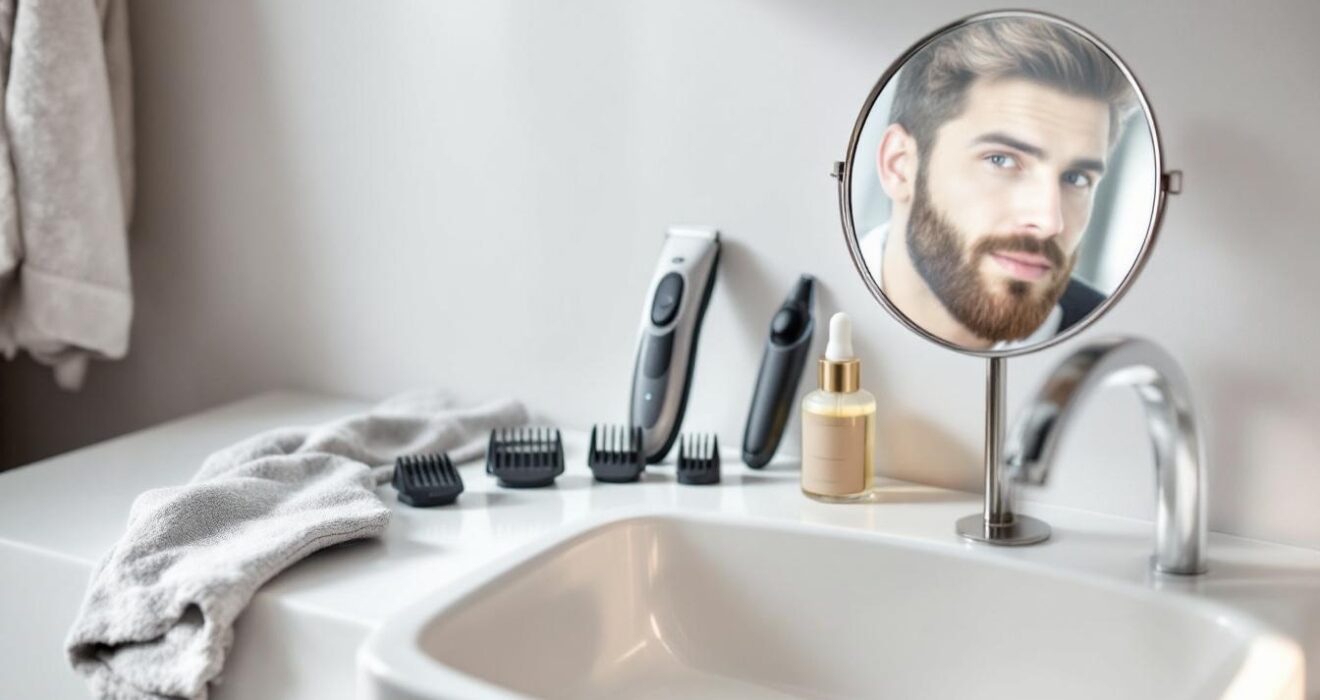
Electric trimmers stand as the cornerstone of beard grooming. They offer speed, precision, and consistency. We recommend a high-quality beard trimmer with adjustable length settings. The Philips Norelco Multigroom 9000 provides versatility for various beard styles.
For those with sensitive skin, trimmers with hypoallergenic blades reduce irritation and treat your face gently. Clean your trimmer after each use to maintain its performance and hygiene.
Manual Scissors: Masters of Detail
While electric trimmers handle the bulk of the work, sharp scissors prove indispensable for detailing. They excel at snipping stray hairs and achieving a polished look. The Tweezerman G.E.A.R. Beard Scissors (known for their precision and durability) are a popular choice among beard enthusiasts.
Combs and Brushes: Untangle and Style
A quality comb untangles your beard before trimming. We suggest a wide-toothed comb for longer beards and a fine-toothed one for shorter styles. The Kent 81T Handmade Beard Comb serves as an excellent all-rounder.
For styling, a boar bristle brush reigns supreme. It distributes natural oils evenly through your beard, reduces frizz, and promotes a healthy shine. The ZilberHaar Pure Boar Bristle Beard Brush stands out as a favorite among beard aficionados.
Beard Oils and Balms: The Final Touch
After trimming, apply beard oil or balm to maintain softness and manageability. Oils like the Honest Amish Classic Beard Oil moisturize both your beard and the skin underneath, reducing itchiness and promoting healthy growth.
If you prefer more hold, beard balms (such as the Mountaineer Brand Beard Balm) offer conditioning properties while helping to shape and style your beard.
Cleanup Tools: Keep It Tidy
Don’t forget about cleanup tools. A good quality beard bib or trimming cape catches falling hair, making post-trim cleanup a breeze. Some trimmers even come with built-in vacuum systems to collect hair as you trim.
Equip yourself with these tools to set the stage for a clean, efficient, and satisfying beard trimming experience. Now that you have your arsenal ready, let’s move on to preparing your space for a mess-free trim.

How to Set Up Your Trimming Space
Choose the Right Location
Select a spot with plenty of natural light. Natural light shows the real-world look of your beard. If natural light isn’t available, use a bright, adjustable lamp. Position it to light your face evenly without shadows.
For easy cleanup, trim over a tiled floor or in front of a sink. These surfaces allow you to sweep or wipe away fallen hair easily. Avoid carpeted areas where hair can become trapped.
Set Up Your Mirror
A large, clear mirror is essential for a precise trim. Position it at eye level to prevent neck strain. If possible, use a three-way mirror or set up additional small mirrors to view your beard from different angles.
Some barbers recommend using a fogless shower mirror for wet trims. These mirrors resist fogging, providing a clear view throughout your grooming session.
Contain the Mess
Invest in a quality beard bib or trimming cape. These tools catch falling hair, which prevents it from landing on your clothes or the floor. The BEARD KING Beard Bib features a bib design that attaches to the neck on one end, then has suction cups on the other end to stick on your mirror, creating a secure fit.
If you don’t have a bib, lay down a large, dark-colored towel on the floor or counter. The dark color makes it easier to see fallen hair for thorough cleanup.
Organize Your Tools
Arrange all your tools within arm’s reach before you start. This prevents you from moving around with a half-trimmed beard, which can drop hair everywhere.
Use a small tray or magnetic strip to keep your scissors, combs, and other tools organized and easily accessible. This setup mimics professional barbershops, where efficiency is key.
Prepare for Cleanup
Have a small brush and dustpan ready for quick cleanups. A handheld vacuum works even better for thorough hair removal from hard-to-reach spots.
Keep a trash bin nearby to dispose of hair immediately. This prevents it from scattering around your space.
Now that you’ve set up an efficient, clean trimming station that rivals professional setups, you’re ready to move on to the actual trimming process. In the next section, we’ll guide you through step-by-step techniques to trim your beard without making a mess.
How to Trim Your Beard Without Making a Mess
Prepare Your Beard
Start with a clean, dry beard. Wash it thoroughly with a specialized beard shampoo to remove dirt and oils. Dry it completely with a towel, as wet hair appears longer and can lead to over-trimming. Once dry, use a wide-toothed comb to detangle your beard, working from the bottom up to avoid pulling on knots.
Master the Trimming Technique
Begin with the longest guard on your trimmer to avoid removing too much length. Work in sections, starting from your neckline and moving upwards. Trim against the grain for a closer cut, but avoid pressing too hard.
For different beard styles, adjust your approach. For a full beard, maintain an even length throughout. For a goatee, focus on the chin and mustache area, using the trimmer’s edging blade for precise lines.
When shaping, use a beard shaping tool as a guide. This helps maintain symmetry and clean lines, especially around the cheeks and neckline. It’s easier to take more off than to add it back, so start conservatively.
Maintain Clean Lines and Edges
For a polished look, pay special attention to your neckline and cheek lines. Define your neckline by placing two fingers above your Adam’s apple – this is typically where your beard should end. For cheek lines, follow your natural growth pattern, only removing stray hairs above this line.
Use the trimmer’s edging blade or a straight razor for crisp lines. Move slowly and check your progress frequently in the mirror. If you make a mistake, don’t panic. Let it grow out for a few days and try again, or visit a professional barber (like those at Barber Craft) for a touch-up.
Post-Trim Care
After trimming, use a soft brush to remove loose hairs. Apply beard oil to soothe the skin and keep your beard soft and manageable. Try to maintain regular trims every 2-3 weeks to keep your beard looking its best and minimize the mess of each grooming session.
Mess Prevention Tips
To keep your trimming area clean, consider these tips:

Final Thoughts
You can master the art of trimming your beard without making a mess. The right tools, proper setup, and correct techniques will help you achieve a well-groomed look while keeping your bathroom clean. Regular maintenance minimizes cleanup and improves your beard management skills over time.
Professional expertise can elevate your beard game to new heights. For complex styles or when you want to treat yourself, visit Barber Craft in downtown San Diego. Our skilled barbers offer a range of services tailored to different hair types and styles (with over 25 years of experience).
The goal remains the same whether you maintain your beard at home or seek professional grooming: a clean, stylish look that boosts your confidence. With the right approach and occasional expert touch-ups, you’ll perfect your beard trimming skills and enjoy a mess-free grooming routine.